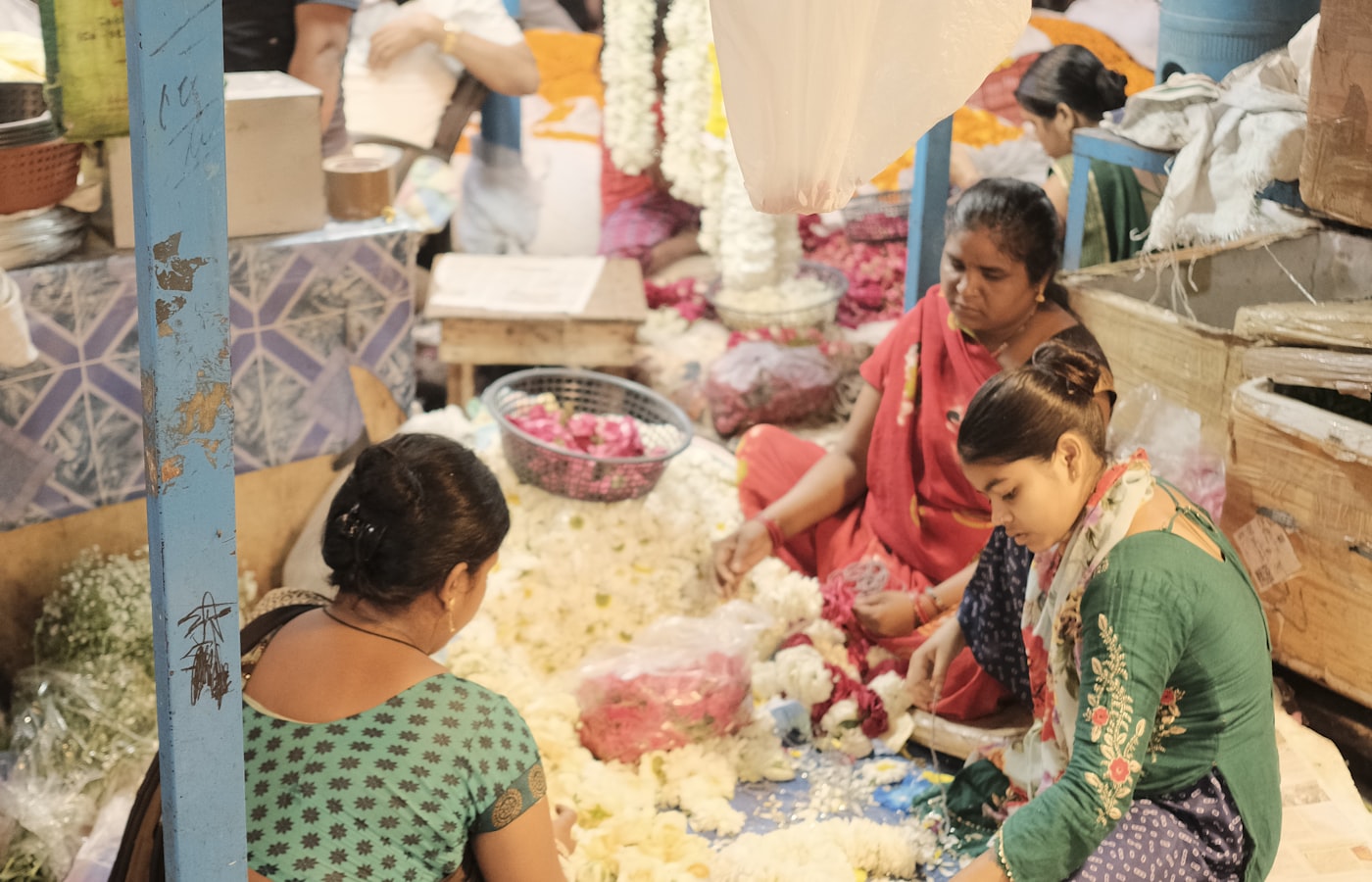
Street vendor market in an Indian city

Street Vendor Atlas

Overview Street vendors are among the most visible yet systematically undercounted economic actors in Indian cities. The Street Vendors (Protection of Livelihood and Regulation of Street Vending) Act, 2014, promised each vendor a certificate of vending, a designated space in a town vending committee, and protection from arbitrary eviction. A decade after enactment, we set out to understand what had actually changed. The Street Vendor Atlas is a spatial and livelihood documentation project covering five cities — Delhi, Mumbai, Kolkata, Ahmedabad, and Bhubaneswar — chosen to represent different urban scales, governance structures, and regional political economies. ...
June 1, 2023 · 3 min · Anshu Jha
Low-income neighbourhood in an Indian city

Urban Livelihoods

Overview Livelihood research on urban poverty has a tendency toward snapshot logic: a survey captures a household at one moment, categorises it by primary income source, and moves on. The reality of low-income urban life is considerably more dynamic — households stack multiple income sources, shift between them seasonally, send members into circular migration, and constantly negotiate between the city and the village. Urban Livelihoods was an eighteen-month community-embedded documentation project in four low-income neighbourhoods in Delhi — Sanjay Colony (Okhla), Savda Ghevra (Rohini), Bawana, and Sangam Vihar. The project prioritised depth over breadth: a small number of households tracked closely over time, with regular visits, rather than a large-sample cross-sectional survey. ...

September 1, 2020 · 4 min · Anshu Jha